Dental Implants
Dental Services
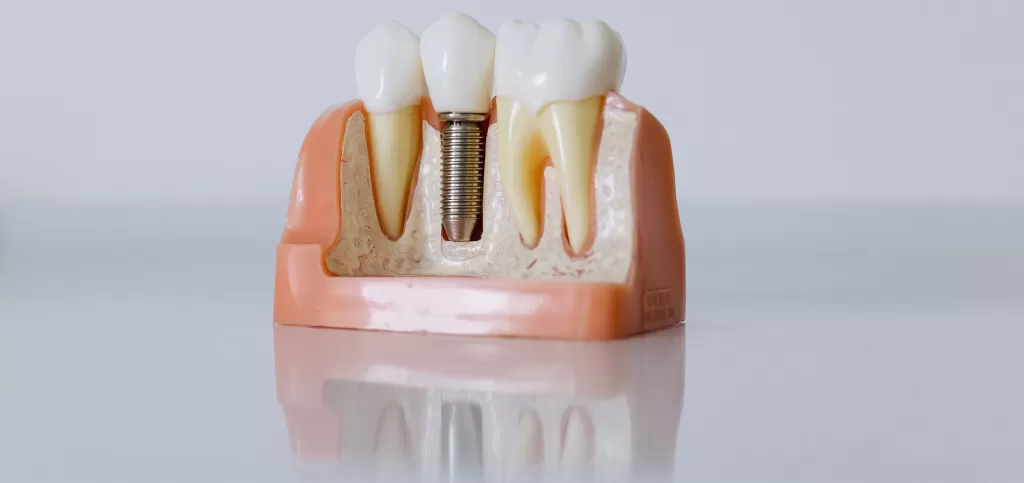
What is a Dental Implant?
A dental implant is a modern solution for replacing missing teeth. The process involves placing a titanium screw (which serves as the artificial root) into the jawbone. A custom-made crown is then securely attached to the implant. This replacement tooth looks, feels, and functions just like a natural tooth, making it an excellent option for restoring your smile.
Dental implants are considered a permanent method of tooth replacement and can last a lifetime with proper care. One of the biggest advantages is that they do not affect the surrounding teeth, preserving the health and stability of your natural teeth.
Why Are Dental Implants the Best Option for Missing Teeth?
- Natural Appearance and Function: Implants are designed to feel, look, and work just like your natural teeth, so no one will notice the difference.
- Protection for Adjacent Teeth: Unlike bridges, dental implants don’t require grinding down or modifying neighboring teeth, ensuring they remain stable and healthy.
- Prevention of Bone Loss: When a tooth is missing, the surrounding bone can deteriorate. Dental implants stimulate bone growth, preventing bone loss.
- No Need for Removable Dentures: Implants eliminate the hassle of removable prostheses, giving you a permanent, more comfortable solution.
- Long-Lasting Solution: With proper oral care, implants can last a lifetime, making them a cost-effective long-term investment.
- Prevention of Gum Disease: Missing teeth can lead to gaps that become breeding grounds for bacteria, increasing the risk of gum disease. Implants fill those gaps and protect your oral health.
- Prevents Facial Sagging: Tooth loss can lead to facial sagging and premature aging. Implants preserve your jawbone, helping maintain a youthful appearance.
How Does the Dental Implant Process Work?
Examination & Planning: We start by reviewing your dental and medical history and conducting a thorough assessment of your jawbone using CT scans. If eligible, we take impressions to create accurate casts for your new tooth.
Surgical Phase: Under local anesthesia, the implant is carefully placed into the jawbone. In cases of low bone density, bone grafting may be performed before the surgery to ensure optimal support for the implant. Depending on your case, the implant may be completely covered by gum tissue, or a temporary healing cap or crown may be placed.
Restorative Phase: Once the implant has integrated with the bone, a custom-designed crown is attached, completing the process and restoring your smile.
FAQs
Yes, in some cases, an implant can be placed immediately after extraction, provided there is good bone quality and high primary stability. This is particularly beneficial for visible front teeth, as we can place a temporary crown in the same session, allowing you to leave the clinic with a full smile the same day.
For most patients, the dental implant procedure is relatively simple and can be less painful than a tooth extraction. We use local anesthesia to numb the area, so you won’t feel any discomfort during the surgery. After the procedure, we prescribe antibiotics and painkillers to manage any soreness. Using a cold pack on the implant site can also help reduce swelling.
There are two main protocols for placing the crown over the implant:
Delayed Loading: This approach involves waiting 3-6 months after implant surgery to allow time for the bone to grow around the implant (a process known as osseointegration) before placing the crown.
Immediate Loading: In select cases, we can place the crown within a few days of the implant surgery. This method requires good oral hygiene, no harmful habits like teeth grinding, and strong bone support for the implant.
Implants and natural teeth bond differently to the jawbone, so connecting them is not recommended unless absolutely necessary. Doing so can decrease the success rate of the implant, as it may lead to complications.
The “All-On-Four” implant technique is ideal for patients with significant bone loss. It involves placing four implants in strategic positions, some at angles, to maximize the available bone. If the implants achieve sufficient stability, a prosthesis can be placed during the same session, providing immediate function and a restored smile.
The cost of dental implants varies depending on the individual case. Factors like the condition of the jawbone, the type of implant, and any additional procedures such as bone grafting can affect the total cost. For an accurate estimate, we recommend scheduling a consultation with our team to evaluate your specific needs.